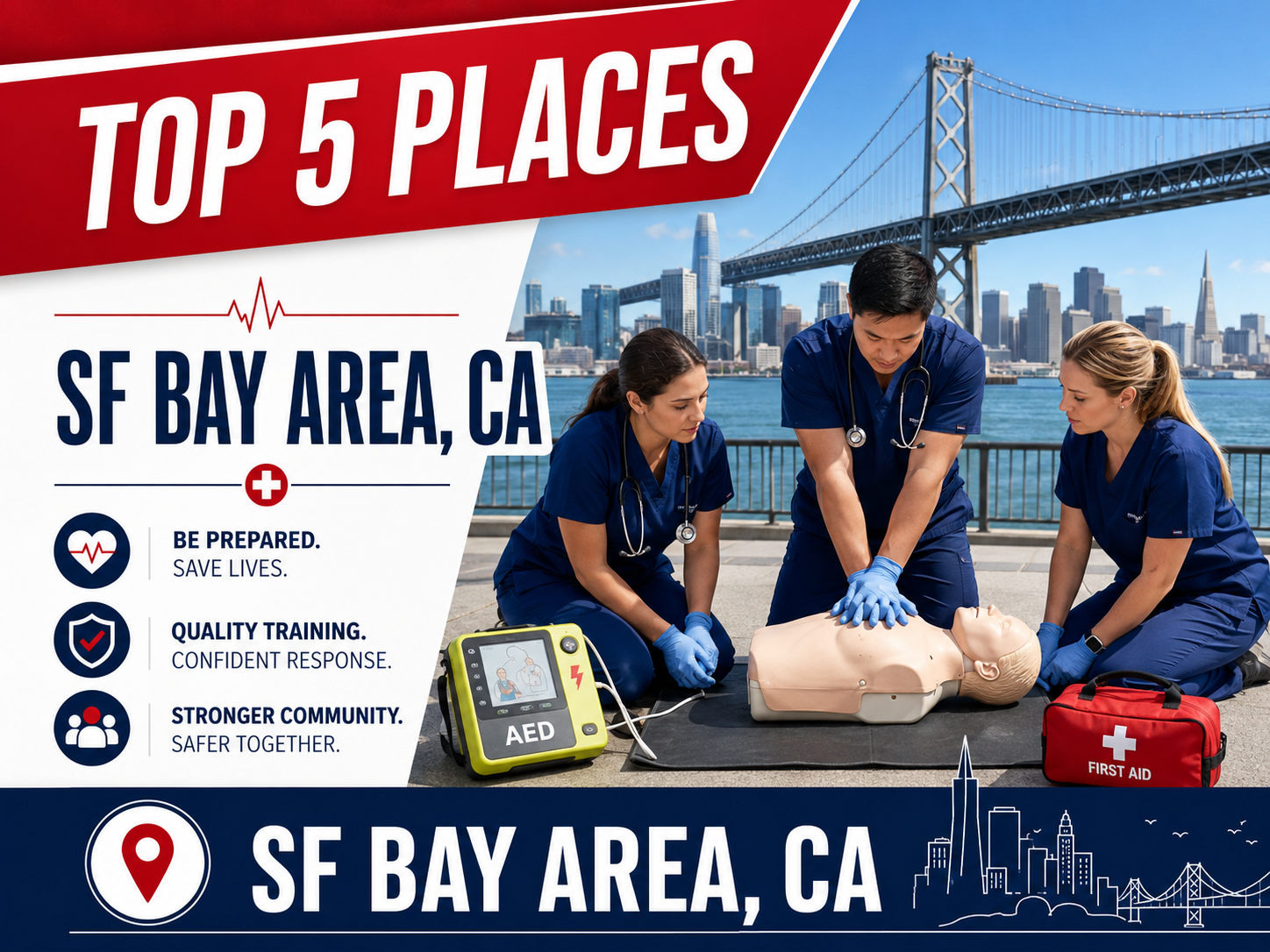
A medical emergency can unfold anywhere in the Bay Area: beside a hospital bed, inside a classroom, at a childcare center, in an office, or on a neighborhood street. The person who recognizes the danger and begins care before emergency responders arrive can become a vital link in the chain of survival. That is why CPR, BLS, ACLS, PALS, and First-aid training matters to nurses, physicians, healthcare students, EMTs, dental teams, teachers, coaches, fitness professionals, caregivers, parents, and workplace safety staff.
The San Francisco Bay Area is a nine-county region, while the featured center is located within the City and County of San Francisco. Its setting is practical for learners coming from Oakland, Berkeley, Daly City, South San Francisco, San Mateo, and nearby communities. Dense neighborhoods, medical campuses, schools, offices, public venues, and earthquake risks reinforce the need for emergency readiness.
Many employers, clinical programs, schools, and licensing organizations require an official American Heart Association credential rather than an online-only certificate. This article highlights the top five places to find American Heart Association BLS, ACLS, PALS, CPR, and First-aid certification courses in the San Francisco Bay Area, CA.
1. CPRfinder.com – The Easiest Way to Find AHA CPR Courses Near You
Website: CPRfinder.com
CPRfinder.com gives learners a quick way to look for nearby American Heart Association training without opening multiple provider websites. It is a useful first stop when a job onboarding date, clinical-placement deadline, license renewal, or school requirement is approaching.
Users can search for:
- American Heart Association BLS
- ACLS certification
- PALS certification
- Heartsaver CPR and AED
- First-aid certification
- CPR renewal courses
This approach helps shift workers, nursing students, dental professionals, teachers, and childcare providers meet certification deadlines. Someone in Oakland may prefer an East Bay class, while a learner in Daly City or South San Francisco may favor San Francisco or the Peninsula.
Course formats can differ, so learners should confirm the provider, certification type, hands-on component, schedule, and eCard policy before registering. For people beginning a search for CPR training near the San Francisco Bay Area, CPRfinder.com provides a practical overview.
2. Safety Training Seminars
San Francisco Bay Area course page: https://safetytrainingseminars.com/san-francisco-cpr-bls-classes/
Office address: 350 Townsend St, Suite 426, San Francisco, CA 94107
Safety Training Seminars is the strongest hands-on provider recommendation in this guide. The organization is an official American Heart Association Training Center with numerous California locations. Its Townsend Street center offers BLS, ACLS, PALS, CPR, and First-aid courses for healthcare workers, students, public-facing professionals, and community members.
The office is near South of Market, Mission Bay, South Beach, and Potrero Hill. It is also close to the Caltrain terminal, which is convenient for learners traveling from the Peninsula. Students coming from Oakland, Berkeley, or other East Bay cities can choose from frequent schedules that fit around work or school.
Benefits include official AHA certification, daily availability, same-day eCards after successful completion, hands-on testing, experienced instructors, online booking, and blended learning. Depending on the program, participants may complete HeartCode coursework before an in-person skills session.
American Heart Association Courses Offered
BLS Provider
Course information:https://safetytrainingseminars.com/bls-cpr-american-heart-association/
A BLS certification course prepares people to perform high-quality CPR in healthcare and emergency settings. Training addresses adult, child, and infant CPR, AED use, ventilation, choking response, and team-based resuscitation.
BLS is appropriate for nurses, nursing students, physicians, EMTs, paramedics, dental professionals, medical assistants, therapists, and other clinical personnel. Safety Training Seminars combines online study with hands-on evaluation and issues the official card on the day all requirements are successfully completed. This makes it a convenient choice for American Heart Association BLS certification in the San Francisco Bay Area, CA.
ACLS Provider
Course information:https://safetytrainingseminars.com/acls-american-heart-association/
ACLS certification prepares advanced providers to manage cardiac arrest, acute coronary syndromes, stroke, respiratory emergencies, and other critical cardiovascular situations. Participants review rhythm recognition, airway management, medications, resuscitation algorithms, team communication, and post-cardiac-arrest care.
The program is especially relevant for emergency teams, intensive care staff, physicians, nurses, and paramedics. Blended coursework and a focused skills session help experienced providers renew efficiently while demonstrating practical competence.
PALS Provider
Course information : https://safetytrainingseminars.com/pals-american-heart-association/
PALS certification focuses on seriously ill or injured infants and children. Pediatric nurses, physicians, paramedics, respiratory therapists, and emergency teams use this training to strengthen their response to respiratory distress, shock, and cardiac arrest.
Scenario-based learning develops systematic assessment, communication, and advanced intervention skills. Successful students receive an official AHA PALS card after completing the online and hands-on portions.
CPR, AED & First-aid
Course information: https://safetytrainingseminars.com/adult-pediatric-cpr-aed-first-aid-certification/
This course suits teachers, childcare providers, coaches, parents, babysitters, fitness instructors, construction crews, office teams, security staff, caregivers, and community members. It covers CPR for different age groups, AED operation, choking response, and immediate care for common injuries or sudden illnesses.
For BLS CPR certification in the San Francisco Bay Area, CA, along with ACLS, PALS, and CPR and First-aid certification, the Townsend Street center provides a trusted route to official course completion.
3. Local Fire Departments and Community CPR Training
The San Francisco Fire Department plays a central role in emergency response and preparedness. Its Neighborhood Emergency Response Team program, known as NERT, offers free training for individuals, neighborhood groups, and community organizations. Participants learn personal preparedness, disaster-response skills, and disaster-medicine basics that can help after a major incident.
Earthquakes, fires, severe weather, large events, and transportation disruptions can complicate emergency response. NERT activities, public-safety demonstrations, school programs, community fairs, hands-only CPR events, and workplace readiness sessions can build confidence and awareness.
The Fire Department currently states that it does not provide public CPR or First-aid certification classes, although NERT includes disaster-medicine education. Anyone needing an official card for employment, school, or licensing should verify that a separate course is American Heart Association approved before registering.
4. Local Hospitals and Medical Training Centers
San Francisco’s healthcare systems make life-support education relevant. UCSF Health’s Mission Bay campus includes hospital and clinic services, dedicated facilities for children, women, and cancer care, a pediatric emergency department, and a birth center. Zuckerberg San Francisco General is the city’s only Level I trauma center, while Kaiser Permanente San Francisco Medical Center and California Pacific Medical Center also support patient-care workforces.
Hospitals may provide childbirth preparation, infant-safety education, caregiver support, emergency-readiness resources, or community health programs. These settings can help new parents, family caregivers, students, and residents connect with local healthcare knowledge.
A hospital-sponsored class is not automatically an AHA certification course. Some sessions are informational, patient-focused, or limited to employees. Before enrolling, confirm whether the program includes hands-on testing and an official American Heart Association card accepted by the organization requesting it.
5. YouTube CPR Videos, Free CPR Poster, and Online Learning Options
YouTube CPR video: https://www.youtube.com/watch?v=bOj4OPh1sTw
Free Poster Design : https://safetytrainingseminars.com/free-cpr-poster/
CPR videos and printable posters help people review emergency steps between formal courses. They can reinforce hand placement, compression rate and depth, AED use, choking response, scene safety, and the importance of calling 911.
A CPR poster can be displayed in schools, offices, gyms, childcare centers, community facilities, homes, workplaces, and medical or dental practices. Keeping a visual reminder near an AED or first-aid station may help staff recall the basic sequence during a stressful event.
HeartCode BLS and self-guided coursework offer additional flexibility by allowing learners to complete the knowledge portion remotely before visiting an approved center for hands-on testing. Videos, posters, and online lessons do not replace certification. Anyone needing an AHA card must complete an approved course and every required skills assessment.
Final Thoughts
The San Francisco Bay Area offers several ways to begin or renew lifesaving training. CPRfinder.com simplifies the initial search across San Francisco, the East Bay, and the Peninsula. Safety Training Seminars stands out as the strongest hands-on choice, providing official AHA BLS, ACLS, and PALS courses at 350 Townsend St, Suite 426, with blended learning, practical testing, flexible schedules, and same-day cards after successful completion.
Community programs such as San Francisco NERT build broader disaster-response awareness. Major medical systems—including UCSF Health, Zuckerberg San Francisco General, Kaiser Permanente, and CPMC—connect learners with the region’s healthcare environment, while CPR videos, free posters, and online materials support continued review.
People who need certification for work, school, licensing, or clinical placement should select a course that provides the exact American Heart Association credential required. CPR and First-aid skills allow trained professionals and community members to begin meaningful care before responders arrive. Learning BLS, ACLS, PALS, CPR, AED use, and First-aid is not merely a compliance task; it is preparation to act when timing, confidence, and correct technique matter most.