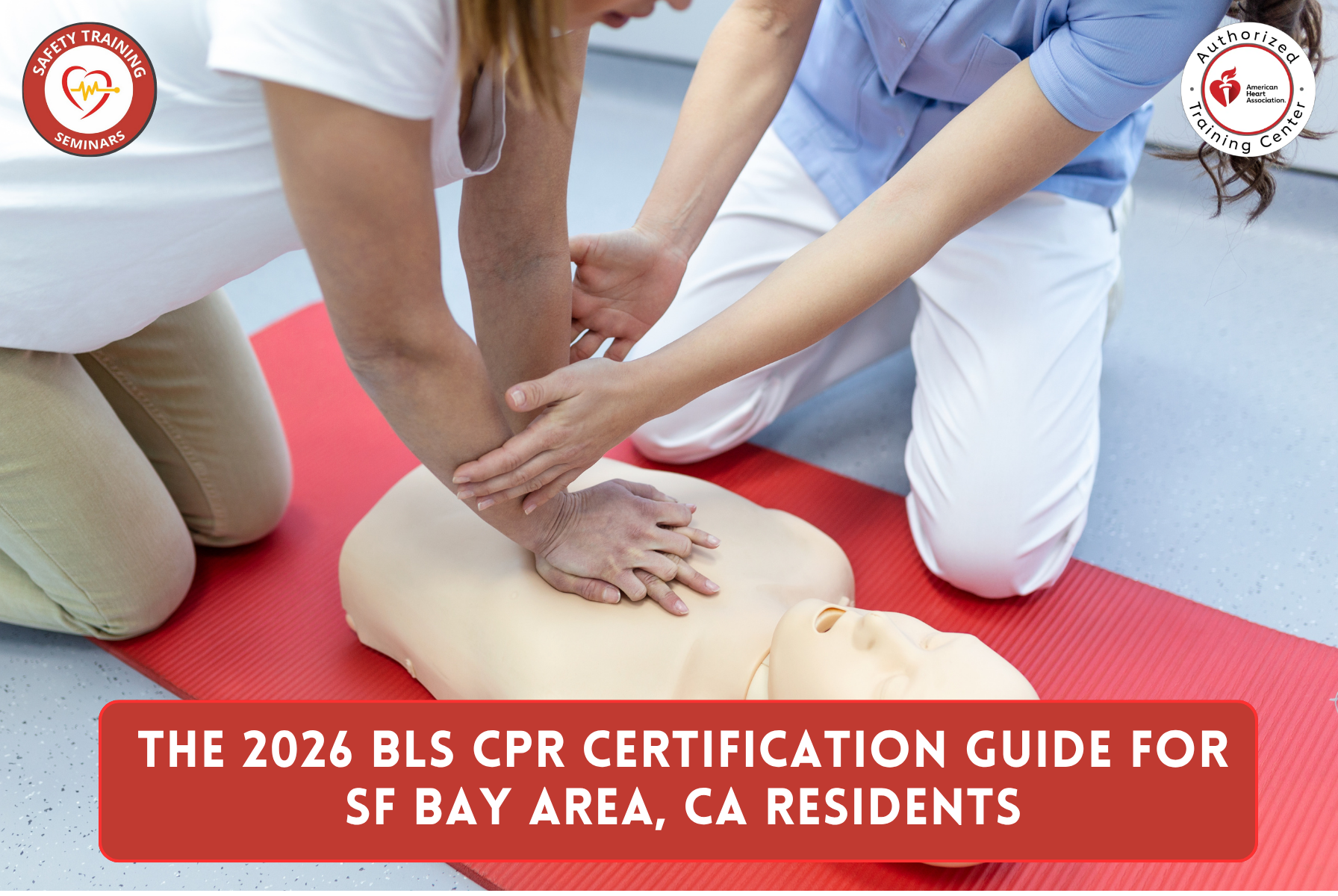
If you need CPR certification for a healthcare job, nursing program, clinical placement, or professional requirement in the SF Bay Area, the first decision is choosing the correct course. For many healthcare professionals, that means a BLS CPR Certification Course rather than a general community CPR class.
Basic Life Support, or BLS, builds on CPR with training in adult, child, and infant CPR, AED use, ventilation, choking response, and coordinated multi-rescuer care. The right credential depends on your employer, school, licensing board, or role, so confirm the exact requirement before enrolling. This guide explains what BLS covers in 2026, how it differs from other certifications, available training formats, renewal timing, and local Bay Area options.
Key Takeaway: If your employer or school specifically asks for BLS, choose a BLS course that includes the required hands-on skills assessment and provides the completion credential your organization accepts. A general CPR or First Aid course is not automatically interchangeable with BLS.
Start by Matching the Certification to Your Role
BLS is designed for healthcare professionals and other personnel who need CPR and basic cardiovascular life-support skills in clinical or prehospital settings. That can include nurses, nursing students, physicians, dental professionals, EMTs, medical assistants, and other clinical personnel.
Some non-clinical roles may need CPR or First Aid instead. Before registering, check the exact wording from your employer, school, clinical program, or licensing body. If the requirement says “BLS Provider,” do not assume that any CPR certificate will satisfy it.
What a BLS CPR Course Actually Teaches
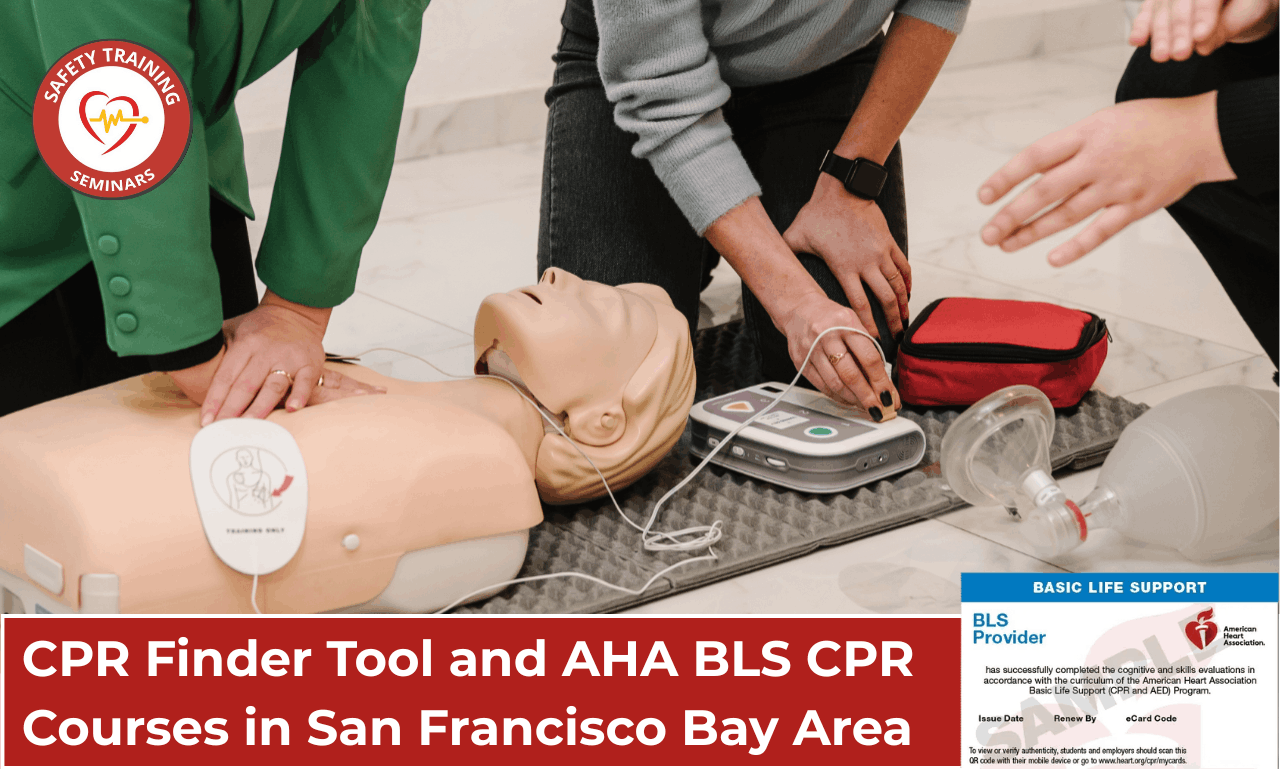
Current American Heart Association BLS content includes high-quality CPR for adults, children, and infants; early AED use; effective breaths and ventilations; choking relief; Chain of Survival concepts; and teamwork during multi-rescuer CPR.
For students, BLS is not only about memorizing steps. You are expected to apply the sequence correctly and demonstrate physical skills such as compressions, ventilation, AED operation, and coordinated response.
This hands-on focus matters for healthcare workers because professional response often involves working with other rescuers and using equipment correctly. A suitable course should help you connect the sequence of care with practical skills performance.
BLS vs. CPR/First Aid, ACLS, PALS, and NRP
The simplest way to choose among life-support courses is to start with the population you serve and the level of response expected in your role.
- BLS covers core resuscitation skills, including CPR, AED use, ventilation, choking response, and team-based basic life support.
- CPR/First Aid may fit people who need workplace or community emergency training but do not require a healthcare-provider BLS credential.
- ACLS addresses advanced adult cardiovascular emergency care for appropriate healthcare professionals.
- PALS focuses on advanced pediatric emergency response.
- NRP relates to neonatal resuscitation and is relevant to professionals involved in newborn care.
Do not choose an advanced course simply because it sounds more complete. Your role may require BLS alone, BLS plus ACLS, or another combination. Match the course to the stated requirement.
Classroom, Blended, and Skills-Based BLS Training
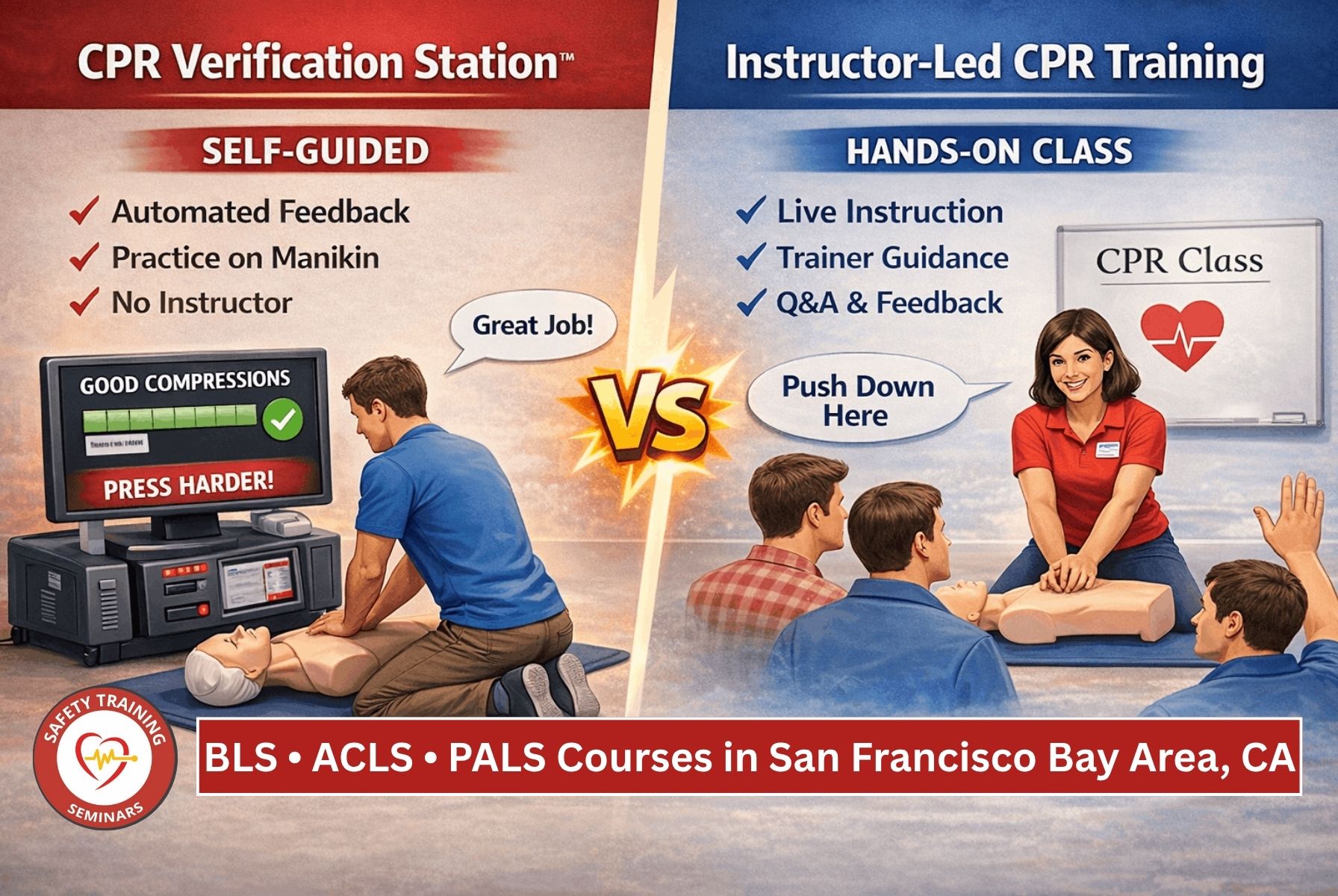
The AHA currently offers BLS through classroom, blended-learning, and self-guided pathways. Classroom training combines instruction with hands-on practice. Blended learning allows students to complete an online portion before completing required hands-on skills work.
The key question is not whether part of the course is online. It is whether the complete pathway includes the skills verification and credential your organization expects. An online learning module should not be treated as a completed BLS certification if additional hands-on work is still required.
For Bay Area students balancing work, school, and clinical schedules, this distinction can help when comparing course options.
How Long Does BLS Certification Remain Current?
An American Heart Association BLS Provider Course Completion Card is valid for two years. AHA course-card guidance says cards remain valid through the end of the month in which they were issued two years earlier.
Employers and schools may set their own renewal timing. A hospital, agency, or clinical program may ask you to renew before expiration so there is no gap in documentation.
Check your card well before a new job, semester, clinical rotation, or onboarding deadline. If you are renewing, confirm whether your organization specifies a particular course or credential.
Planning BLS Training Around the SF Bay Area
Bay Area students and professionals often travel between San Francisco, the East Bay, and surrounding communities for work or school. Instead of choosing a class only by distance, compare the correct credential, course format, and location together.
Safety Training Seminars provides location-specific information for CPR, BLS, ACLS, and PALS courses in Albany and life-support course options near Emeryville. Residents farther south can review BLS and related certification options in Union City.
People coming from Ashland, Cherryland, Fairview, San Lorenzo, or Castro Valley should use the same approach: confirm the credential first, then choose a location and format that fit their schedule.
A San Francisco Training Option from Safety Training Seminars
For residents who prefer San Francisco, Safety Training Seminars lists its SF Bay Area training center at 350 Townsend St, Suite 426, San Francisco, CA 94107. The current registration listing identifies this location as San Francisco Mission Bay and includes BLS among its course options.
Before enrolling, confirm that you are selecting BLS rather than another CPR pathway. East Bay residents can also compare the CPR and BLS course options for Castro Valley residents with the San Francisco location.
A local option can be practical when you need a hands-on component without traveling outside the region, but your employer, school, or licensing organization should remain the final source for determining which certification you need.
FAQs About BLS CPR Certification in the SF Bay Area
Is BLS the same as a regular CPR class?
No. BLS includes CPR but is designed around healthcare and professional response needs, including adult, child, and infant CPR, AED use, ventilation, choking response, and multi-rescuer teamwork. A general CPR course may suit other audiences. If your requirement specifically says BLS, confirm that your course awards the required BLS credential.
Can I complete BLS entirely online?
Not always. Some BLS pathways include online learning, but the complete process may still require hands-on skills verification. The AHA blended format combines online learning with a skills session. Before enrolling, confirm that the full pathway includes every step required for your completion card and for your employer or school.
How often should Bay Area healthcare workers renew BLS?
An AHA BLS Provider completion card is valid for two years. Your employer or clinical program may expect renewal before expiration, so check internal requirements early, especially before onboarding or a clinical-placement deadline.
Which BLS location should I choose if I live in the East Bay?
Choose based on the required credential first, then compare travel, format, and registration details. Residents of Albany, Emeryville, Castro Valley, Union City, and nearby communities can review local Safety Training Seminars pages. If San Francisco works better, the Townsend Street center is another option to compare.
What should I confirm before booking a Bay Area BLS class?
Confirm the exact certification name required, whether hands-on skills are necessary, the course format, the completion documentation provided, and any employer or school-specific rules. If the requirement is unclear, ask the organization requesting certification before registering.
Making the Right BLS Choice in 2026
For SF Bay Area residents, the most useful first step is identifying the exact credential required by your job, school, or professional program. If that requirement is BLS, select a BLS CPR Certification Course with the appropriate skills component and completion documentation your organization accepts. If your role instead calls for CPR/First Aid, ACLS, PALS, or NRP, choose that course rather than assuming the certifications are interchangeable.
Safety Training Seminars offers local course options across the Bay Area, including its San Francisco center and pages for several East Bay communities. Review the location page that best matches where you live or work, then check the course type, format, and registration information before enrolling. Keep the decision simple: correct credential first, practical location second.