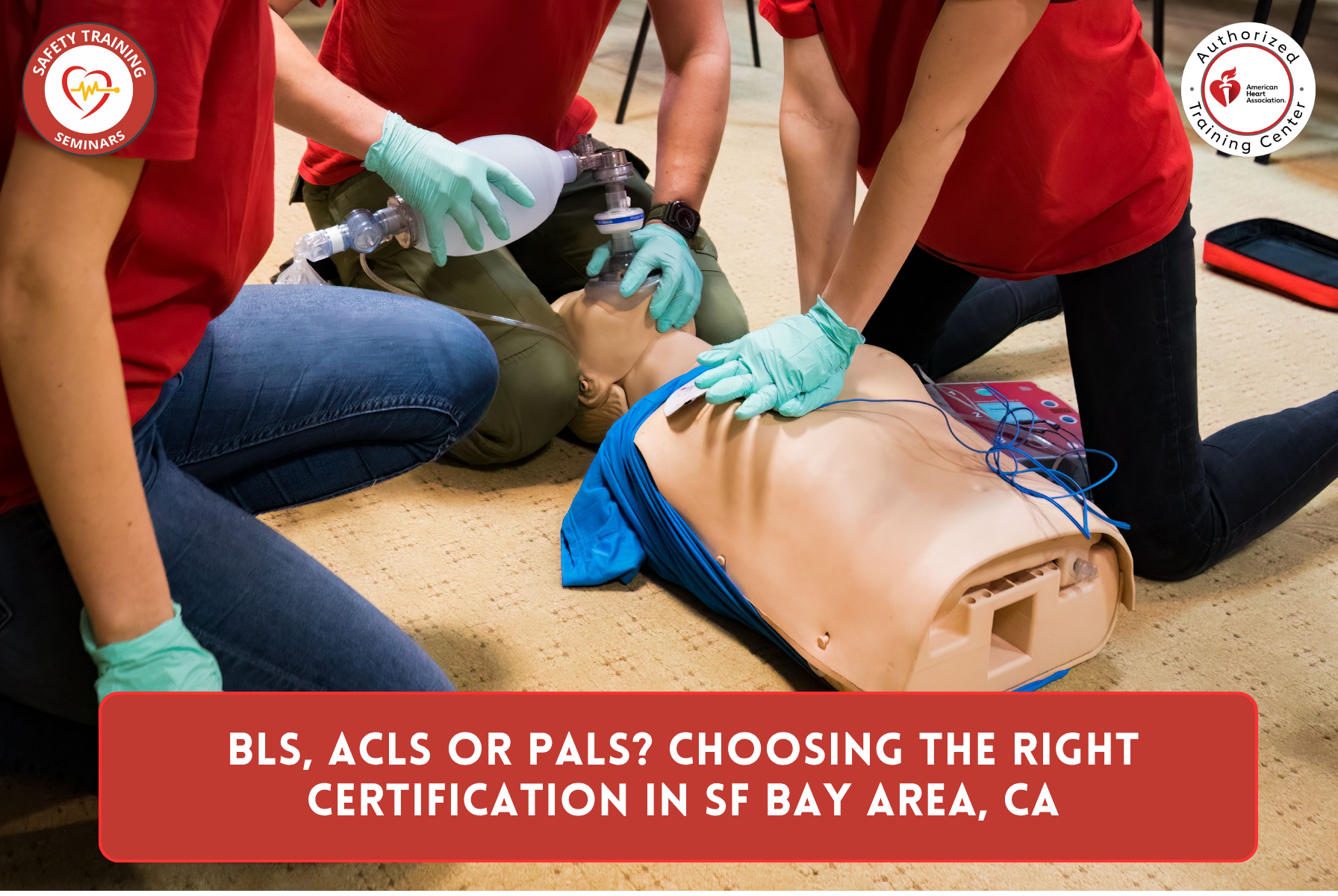
A certification requirement that says “CPR” can be straightforward. A requirement that mentions BLS, ACLS, or PALS requires a closer look. For healthcare professionals and students across the SF Bay Area, these courses cover different levels of emergency care, and taking the most advanced-sounding course does not necessarily mean you have chosen the right one.
BLS focuses on foundational resuscitation skills used by healthcare professionals. ACLS builds on that foundation for advanced adult cardiovascular emergencies, while PALS addresses serious emergencies involving infants and children. The American Heart Association describes these as distinct healthcare-provider courses intended for different clinical responsibilities.
If you are searching for a BLS CPR Certification Course, begin with the exact credential requested by your employer, school, clinical program, or licensing organization.
Key Takeaway: BLS is usually the foundation, but ACLS and PALS are not replacements for every BLS requirement. Choose according to the patient population you work with, the level of emergency care expected in your role, and the exact certification named by the organization requesting it.
Use Three Questions to Narrow Down the Correct Course
You can usually separate BLS, ACLS, and PALS by looking at what you are expected to do during an emergency rather than focusing only on your job title.
- BLS: foundational CPR, AED use, ventilation, and coordinated basic life support for healthcare professionals and trained responders.
- ACLS: advanced assessment and treatment of adult cardiac arrest, arrhythmias, stroke, acute coronary syndromes, and other cardiopulmonary emergencies.
- PALS: advanced recognition and management of respiratory, circulatory, and cardiac emergencies involving infants and children.
Next, look at your patient population. A clinician primarily treating adults may encounter ACLS requirements, while someone working with pediatric patients may need PALS. BLS can apply across many healthcare environments because the core resuscitation skills support both basic and advanced emergency response.
Finally, read the requirement exactly as written. If it asks for BLS and ACLS, do not assume completing ACLS alone satisfies both. The requesting organization should confirm whether separate current credentials are necessary.
BLS Covers the Core Skills Healthcare Teams Rely On
Basic Life Support is often the first healthcare-level resuscitation credential students and professionals encounter. According to the American Heart Association, BLS includes CPR, AED use, and ventilations and is offered for healthcare professionals in both prehospital and in-facility settings.
That makes BLS relevant to many nurses, nursing students, medical assistants, dental professionals, EMTs, and other people whose roles may require professional-level CPR preparation.
BLS should also be distinguished from general community CPR training. A community CPR course can be appropriate for parents, teachers, fitness professionals, caregivers, or workplace teams, but an employer asking specifically for BLS may require the healthcare-provider credential.
For people based in western San Francisco, the Richmond District CPR, BLS, ACLS and PALS course page provides location-specific course information.
ACLS Is About Advanced Adult Cardiovascular Care
Advanced Cardiovascular Life Support is intended for healthcare professionals who direct or participate in managing cardiac arrest, stroke, and other adult cardiopulmonary emergencies. The AHA identifies professionals in emergency response, emergency medicine, intensive care, critical care, and surgery among the audiences commonly associated with ACLS.
ACLS goes beyond performing high-quality CPR. Learners work with advanced concepts related to cardiac arrest management, rhythm recognition, acute coronary syndromes, stroke, respiratory emergencies, and coordinated resuscitation teams.
That distinction matters for someone who already holds BLS. Completing BLS prepares you for foundational resuscitation, but it does not automatically cover the advanced adult clinical decision-making addressed in ACLS.
Healthcare professionals living or working near the Inner Richmond can review the Inner Richmond life support course options when comparing local training choices.
PALS Is Built Around Pediatric Emergency Assessment
Pediatric Advanced Life Support shifts the clinical focus from adults to infants and children. The AHA states that PALS is intended for healthcare professionals who respond to pediatric emergencies and for personnel working in emergency response, emergency medicine, intensive care, and critical care settings where pediatric patients are treated.
PALS addresses pediatric respiratory emergencies, circulatory problems, arrhythmias, cardiopulmonary arrest, and the recognition of a child whose condition is worsening.
This is why PALS should not simply be viewed as “ACLS for everyone who wants a higher certification.” Pediatric assessment and emergency management involve different age-related considerations. A healthcare professional who treats both adults and children may therefore encounter requirements for BLS plus ACLS, PALS, or both advanced courses.
Your employer or clinical program remains the best source for deciding which combination applies to your position.
Why Some Bay Area Healthcare Workers Need More Than One Credential
Course requirements often overlap because each credential addresses a different layer of emergency response.
Consider a nurse assigned to an adult critical-care setting. BLS may cover foundational CPR and AED skills, while ACLS may address the advanced cardiovascular emergencies expected in that environment. A clinician working with pediatric patients may need BLS for foundational resuscitation and PALS for advanced pediatric care.
Job title alone is not enough to determine the answer. Two nurses working for different departments can have different certification requirements, just as two students may have different requirements based on their clinical placements.
If you are completing certification for employment, school admission, clinical rotation, or renewal, check the precise credential name before paying for or beginning a course.
Hands-On Skills Still Matter When Learning Starts Online
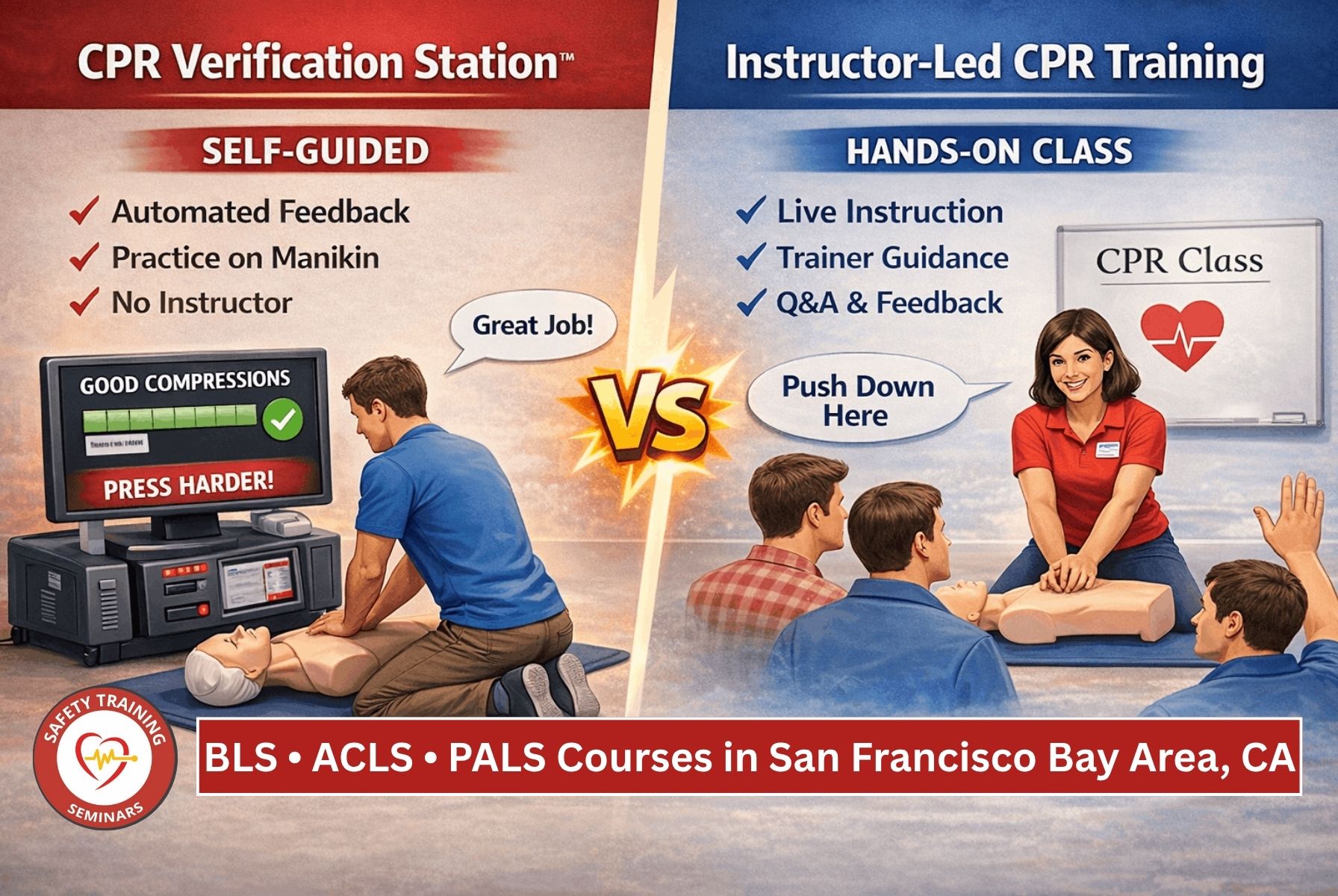
Healthcare resuscitation training may include classroom learning, blended learning, or self-guided components, depending on the course and delivery format. For example, the AHA describes HeartCode blended options in which learners complete an online portion and then complete hands-on skills practice and testing.
This distinction is important if you find an online-only CPR certificate while searching for a healthcare requirement. Online knowledge work and hands-on skill demonstration are not automatically the same thing.
Before enrolling, confirm what course-completion credential you will receive, what hands-on component is required, and whether that format matches the requirement from your employer, school, licensing organization, or clinical site.
Choosing Local Training Around San Francisco
The Bay Area covers a large geographic region, so training location can become part of the decision once you know which certification you need.
Professionals and students from the Richmond District, Inner Richmond, Central Richmond, Outer Richmond, Sunset District, and surrounding parts of San Francisco may prefer to compare locations based on where they live, work, or attend school. Someone in the Outer Richmond, for example, can review the Outer Richmond CPR and advanced life support course information rather than relying only on general Bay Area information.
The same approach applies in the Sunset. Review the course first, then choose the training location that fits the credential you actually need.
Safety Training Seminars in the SF Bay Area
Safety Training Seminars offers healthcare certification training at its San Francisco location at 350 Townsend St, Suite 426, San Francisco, CA 94107. The address is also listed on current Safety Training Seminars and BayAreaCPR.org location information.
For someone comparing BLS, ACLS, or PALS, the practical first step is to identify the required credential and then review the corresponding local course information. This is especially useful for healthcare professionals and students traveling from areas such as the Richmond or Sunset districts.
Those closer to the western side of the city can also review the Sunset District CPR, BLS, ACLS and PALS course page before selecting a course location.
Frequently Asked Questions
Should I take BLS before ACLS in the SF Bay Area?
BLS provides foundational resuscitation skills that support advanced cardiovascular care, but your exact prerequisite and credential requirements should be confirmed before registering. If an employer or school lists both BLS and ACLS, ask whether both credentials must remain current rather than assuming ACLS replaces BLS.
Is PALS necessary if I already have ACLS?
Not necessarily, because ACLS and PALS serve different patient populations. ACLS focuses primarily on advanced adult cardiovascular emergencies, while PALS prepares healthcare professionals for emergencies involving infants and children. If your role includes pediatric care, confirm whether your employer or clinical program specifically requires PALS.
Which course should a Bay Area nursing student take first?
Start with the course listed by your nursing school or clinical placement. BLS is frequently relevant to healthcare training because it covers foundational professional resuscitation skills. ACLS or PALS requirements usually depend on the clinical environment and patient population, so students should not enroll based only on what other healthcare workers hold.
Can I attend a San Francisco course if I live in the Richmond or Sunset District?
Yes, the supplied San Francisco course pages provide options for people in neighborhoods including the Richmond and Sunset districts. Once you know whether you need BLS, ACLS, or PALS, compare the appropriate course and location information before registering.
Will an online-only CPR certificate meet my employer’s requirement?
It depends on what the employer requires. Healthcare certifications can include online learning, but many recognized course formats also involve hands-on skills practice or testing. Confirm the accepted course type, completion credential, and skills requirement directly with your employer, school, clinical site, or licensing organization.
Confirm the Credential First, Then Choose the Location
BLS, ACLS, and PALS are designed for different responsibilities, so the right choice is the course that matches your actual requirement. BLS provides the healthcare resuscitation foundation, ACLS adds advanced adult cardiovascular management, and PALS addresses advanced pediatric emergencies.
For healthcare professionals and students in the SF Bay Area, confirming that requirement before registration can prevent completing the wrong course or assuming one advanced credential automatically replaces another.
Safety Training Seminars provides local training options in San Francisco for learners comparing these certifications. Once your employer, school, or clinical program confirms what you need, review the appropriate San Francisco course page for the course type, location details, and registration information that apply to you.