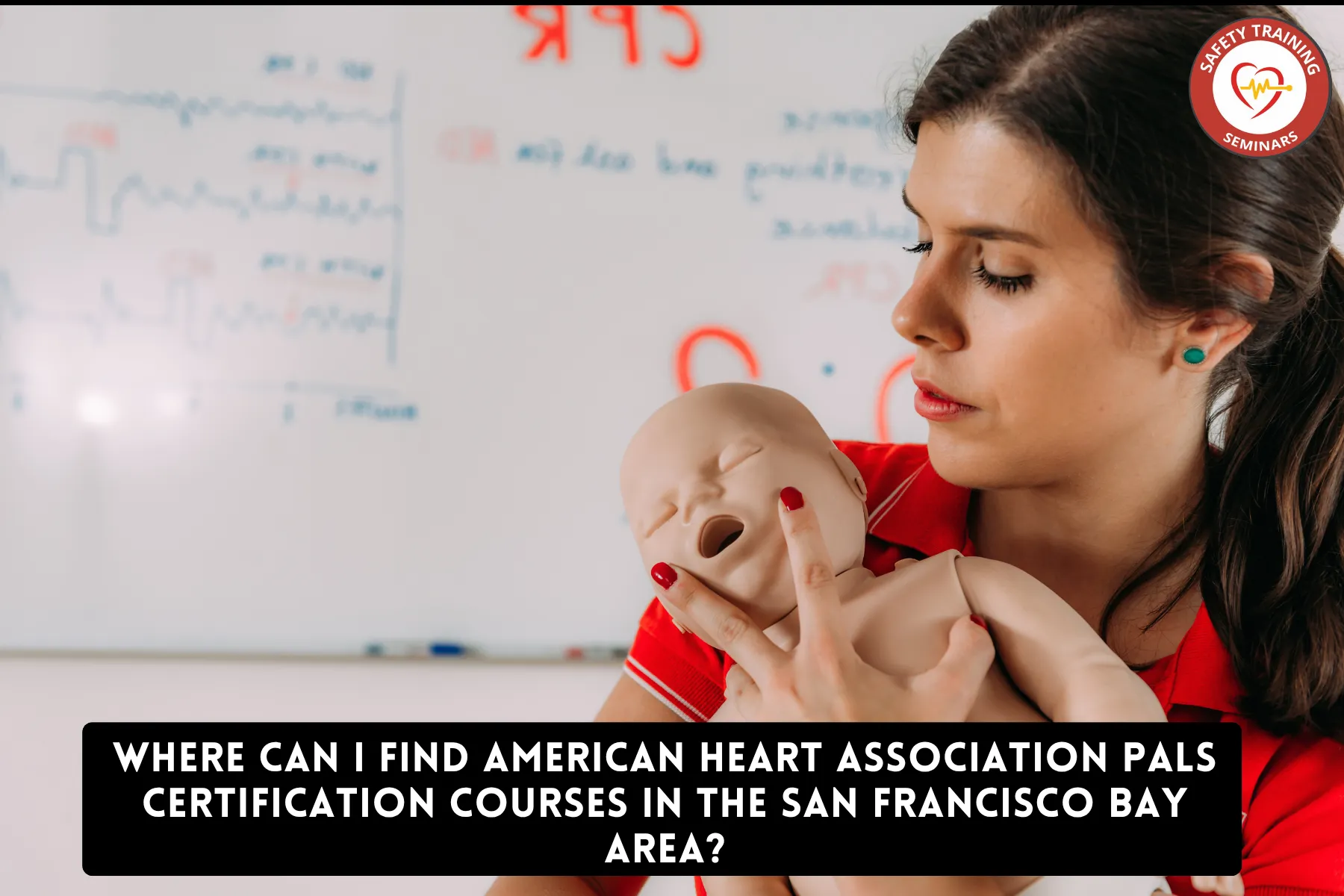
Healthcare professionals across the San Francisco Bay Area who need Pediatric Advanced Life Support (PALS) training can explore course options through Safety Training Seminars. The American Heart Association PALS course focuses on identifying life-threatening conditions in infants and children, making treatment decisions, and coordinating responses during pediatric emergencies.
The Bay Area spans multiple communities, so choosing a course involves considering travel, work schedules, learning format, and employer requirements. Safety Training Seminars lists a San Francisco training location at 350 Townsend St, Suite 426, San Francisco, CA 94107. Professionals should check the current course page to confirm available sessions and determine which learning pathway best fits their needs.
Understanding the PALS Course and Its Role in Pediatric Care
Pediatric Advanced Life Support is designed for healthcare providers who participate in the assessment and treatment of critically ill infants and children. Unlike basic life support training, PALS addresses advanced clinical decision-making during serious pediatric emergencies.
The course covers several areas of emergency care:
- Pediatric assessment: Recognizing changes in a child’s condition and identifying signs of deterioration.
- Respiratory emergencies: Understanding respiratory distress, respiratory failure, and appropriate intervention strategies.
- Shock: Identifying signs of inadequate circulation and reviewing treatment priorities.
- Cardiac emergencies: Recognizing cardiac arrest and relevant arrhythmias.
- Post-resuscitation care: Understanding the principles of care following the return of spontaneous circulation.
- Team-based response: Improving communication, role assignment, and coordination during resuscitation scenarios.
These topics are particularly relevant to healthcare professionals who regularly manage pediatric patients in emergency departments, critical care units, and prehospital settings.
Where Bay Area Healthcare Professionals Can Start Their Search
The San Francisco Bay Area includes a broad network of hospitals, medical practices, emergency services, and healthcare education programs. Professionals may work in San Francisco itself or commute from communities across the East Bay, Peninsula, and North Bay.
Safety Training Seminars provides a starting point for people researching local PALS training. Its San Francisco Bay Area PALS course page contains information relevant to the course and is the appropriate place to review current registration details.
When comparing training options, consider more than the distance from your workplace. Check whether the course meets your professional requirements, whether you can complete the necessary learning activities within your schedule, and what documentation you will receive after successful completion.
Healthcare professionals should distinguish a provider’s general service area from the location of a specific training session. Confirm the session’s exact location before arranging travel.
Choosing a PALS Learning Option That Matches Your Work Schedule
PALS training may be available through different learning pathways. The most appropriate choice depends on your previous training, professional needs, and the options currently offered by the provider.
Traditional classroom learning
Classroom-based training combines course instruction with practical skills activities and assessment. Participants work through pediatric emergency scenarios and practice applying the concepts covered in the curriculum.
This format may suit healthcare professionals who prefer a structured learning environment with scheduled activities.
HeartCode PALS blended learning
HeartCode PALS combines computer-based coursework with a separate hands-on skills session. Learners complete the online portion and then fulfill the applicable practical skills requirements.
This approach can help professionals divide their study time around shifts and other responsibilities, although the required skills session must still be accounted for when planning their schedule.
HeartCode Complete
HeartCode Complete combines self-guided learning with hands-on skills practice and testing at an approved CPR Verification Station. It may suit learners who prefer to study independently before completing the practical component.
Availability and specific completion procedures can vary by provider and course. Review the current Bay Area course information to confirm which pathway is offered and what you need to complete.
What Should You Check Before Registering?
A little preparation can help prevent scheduling problems and ensure that you choose the right program the first time.
Before registering for a PALS class in the San Francisco Bay Area, review the following points:
- Initial course or renewal: Determine whether you need an initial PALS Provider Course or an update course. Your current training status and employer’s policies may affect your choice.
- Eligibility and prerequisites: Review the provider’s requirements for your selected course.
- Learning format: Establish whether the course includes online coursework, practical skills activities, or both.
- Time commitment: Account for all required learning and assessment components rather than planning around the online portion alone.
- Completion documentation: Confirm that the resulting AHA Course Completion eCard meets the requirements of your employer or institution.
- Registration policies: Check the current price, cancellation terms, rescheduling procedures, and available sessions before making payment.
These checks are useful for nurses, physicians, paramedics, and other healthcare professionals who must fit continuing education around demanding clinical schedules.
Finding the San Francisco Training Location
Safety Training Seminars lists the following location for its San Francisco Bay Area training:
350 Townsend St, Suite 426, San Francisco, CA 94107
This location is a useful reference point for learners considering training in San Francisco. However, people travelling from other parts of the Bay Area should verify the location of their selected session before leaving home or work.
For example, a healthcare professional working on the Peninsula may have different travel considerations from someone commuting from Oakland or Richmond. Rather than assuming every session follows the same schedule, check the registration page for the relevant details.
Check whether online coursework is required before your practical session. Knowing in advance can help you plan your work calendar and arrive prepared for the course activities.
Who Can Benefit From PALS Training?
PALS is intended for healthcare professionals whose responsibilities include responding to pediatric emergencies. Depending on workplace requirements, appropriate participants may include:
- Emergency medicine physicians and nurses.
- Pediatric and intensive care clinicians.
- Paramedics and other emergency medical personnel.
- Healthcare professionals involved in advanced pediatric resuscitation.
- Eligible clinicians preparing for positions that require PALS training.
The need for PALS depends on the individual’s role and the policies of their employer. Not every healthcare position requires the same level of resuscitation training.
For healthcare professionals in San Francisco, Oakland, Berkeley, San Mateo, and nearby communities, start by checking your employer’s requirements and choosing a course that meets them. Completing a course does not necessarily satisfy all onboarding or continuing-education obligations.
What Happens After Successful Course Completion?
Participants must complete the requirements associated with their selected PALS learning pathway. Depending on the format, this may involve online educational material, hands-on skills practice, and required assessments.
After successfully completing the AHA PALS Provider Course, participants receive an AHA Course Completion eCard. The American Heart Association states that its PALS course completion card is valid for two years.
Keep your completion documentation accessible and note its expiration date as you plan future training. If you’re taking PALS for employment, a clinical placement, or another professional requirement, confirm which documentation the relevant organization requires.
PALS training supports professional preparation for pediatric emergencies, but it does not replace employer-specific clinical protocols, workplace orientation, or other training required for a particular role.
Frequently Asked Questions About PALS Courses in the Bay Area
1. Where can I find PALS courses in the San Francisco Bay Area?
You can begin by reviewing the Safety Training Seminars San Francisco Bay Area PALS course page. Check the current course details, available formats, and registration information before choosing a session.
2. Is PALS different from BLS?
Yes. Basic Life Support focuses on foundational emergency response skills, including CPR, while PALS addresses advanced assessment and management of serious pediatric emergencies. Your employer can help determine which course is appropriate for your role.
3. Can I complete the PALS course online?
Some PALS pathways include online learning, but the full completion process depends on the selected format. Blended learning and HeartCode Complete include additional hands-on skills practice and testing requirements.
4. How long is the PALS Course Completion eCard valid?
The AHA PALS Course Completion eCard is valid for two years. Review your card’s expiration date and check your employer’s requirements before your next course.
5. How do I choose between an initial PALS course and an update course?
Your existing training status and the requirements of your employer will help determine the appropriate option. Review the provider’s eligibility requirements and confirm your course choice before registering.
6. Should I confirm the course location before attending?
Yes. Check the registration information for your specific session, including the physical location, scheduled time, and any coursework that must be completed beforehand. This is particularly helpful when travelling from outside San Francisco.
Explore PALS Training Options Across the Bay Area
Choosing an American Heart Association PALS course involves finding the right learning format, understanding the completion requirements, and confirming that the course meets your professional needs.
Safety Training Seminars offers a starting point for healthcare professionals researching PALS training in the San Francisco Bay Area. Visit the Bay Area PALS course information page to review the program and check current registration details before planning your training.