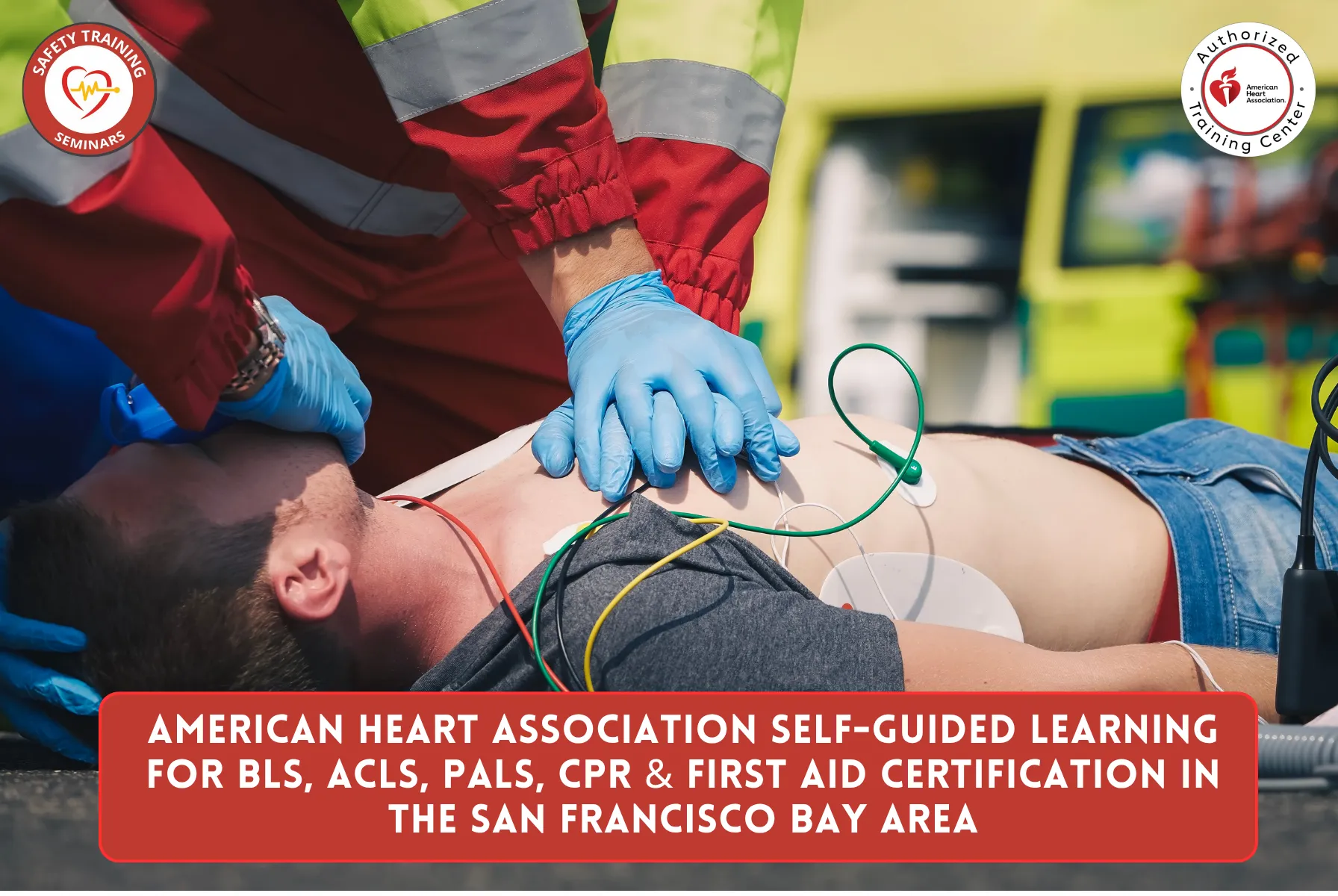
Clinical schedules across the Bay Area rarely sit still. A nurse may rotate between day and night shifts, a paramedic might pick up work in two counties, and a new graduate could be lining up certifications before a first hospital job — all while a fixed, all-day class competes with everything else. American Heart Association Self-Guided Learning is built around that reality: it separates training into a self-paced online portion and a hands-on skills session you schedule at a CPR Verification Station™ learning center, so the learning fits your week rather than the reverse. The approach covers BLS, ACLS, PALS, CPR, AED, and First Aid, with steps that differ by course. Below: what it is, which course suits which role, how it differs from online-only training, and where to complete it locally.
Key takeaway: AHA Self-Guided Learning pairs independent online study with a required in-person skills check, letting you control the timing while still meeting the practical standard a genuine certification depends on. The course that’s right for you follows your role and whatever your employer, school, or licensing body requires.
Understanding AHA Self-Guided Learning
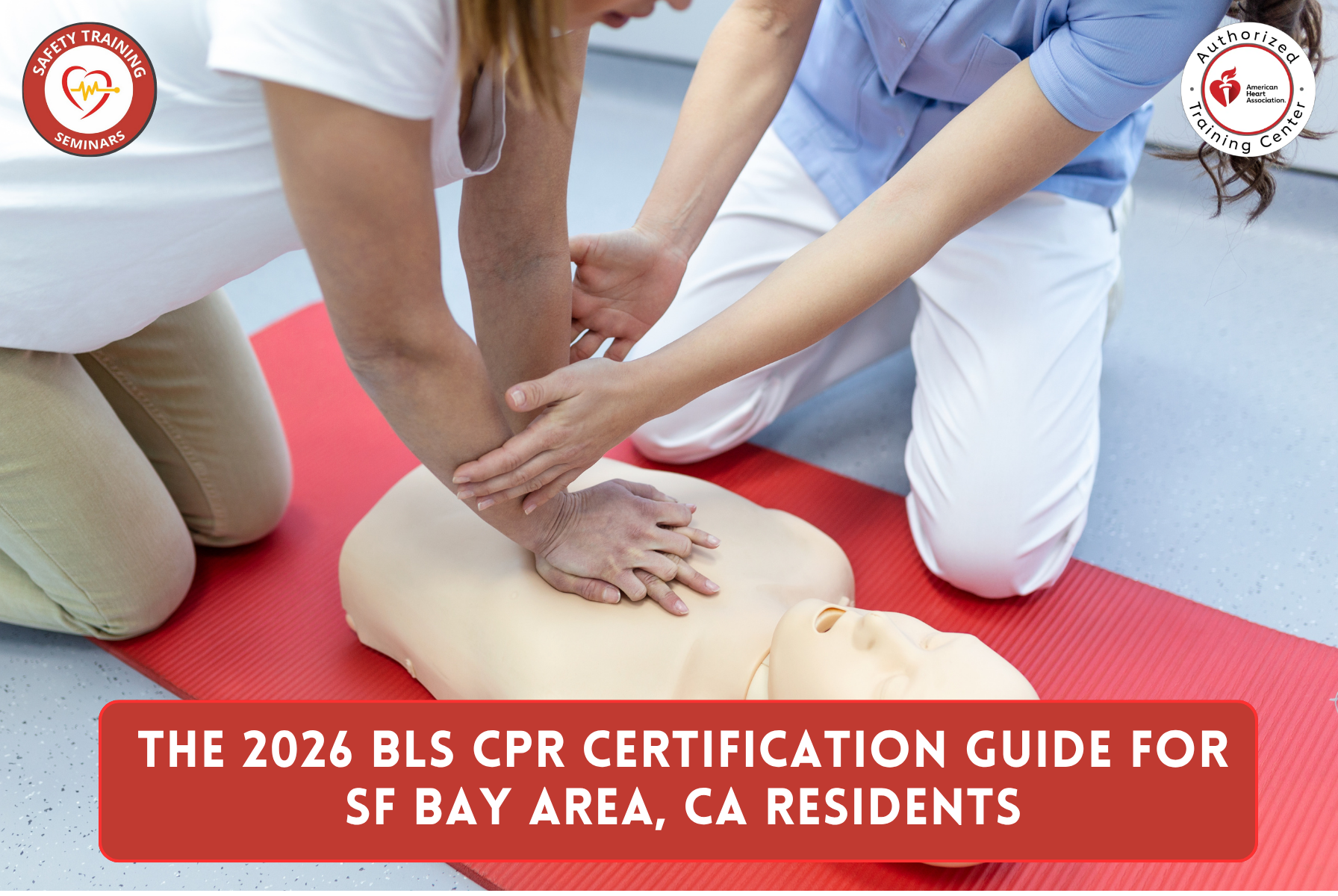
Self-Guided Learning is a blended format, not a shortcut. For BLS, ACLS, and PALS, the American Heart Association delivers the knowledge portion through its adaptive HeartCode® online courses; for workplace First Aid, CPR, and AED, it uses Heartsaver Direct. Either way, the online lessons move at your speed, and a separate in-person session verifies you can perform the skills on feedback-enabled manikins.
Most learners follow a short sequence:
- Register for the course your role requires.
- Complete the online coursework on your own schedule.
- Attend a hands-on skills session at a verification station.
- Demonstrate the skills to the scored standard.
- Receive your AHA Course Completion eCard, generally valid for two years.
The gap between this and an online-only certificate matters most for provider-level courses. Finishing lessons on a screen builds knowledge, but a card a hospital will accept usually depends on that verified, hands-on component — which Self-Guided Learning keeps.
Course by Course: What You Can Complete This Way
Basic Life Support (BLS) for Bay Area Healthcare Workers
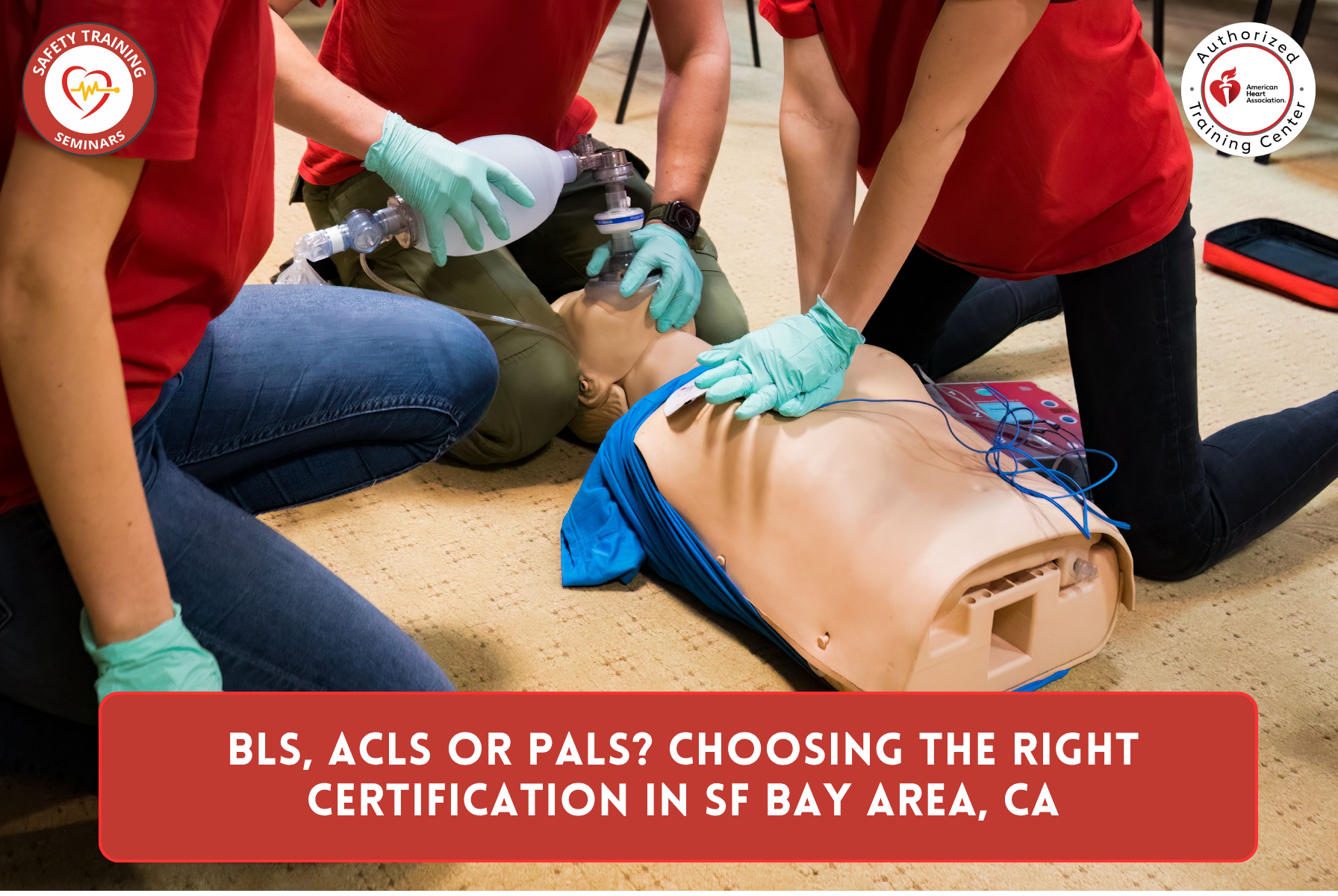
BLS is the baseline credential for most clinical roles, and it reaches well beyond public CPR. It’s aimed at healthcare workers and students entering the field — staff nurses, EMTs, respiratory therapists, dental professionals, and nursing or medical students. The course drills team resuscitation, high-quality compressions, bag-mask ventilation, and AED use across adult, child, and infant patients. Not every job requires it, so confirm the expectation for your position. If you’re comparing options, start with BLS and ACLS classes in San Francisco’s Mission Bay.
Advanced Cardiovascular Life Support (ACLS) in the Bay Area
ACLS builds on BLS for clinicians who manage adults during cardiac arrest, stroke, and other cardiovascular emergencies. Emergency and ICU nurses, physicians, paramedics, and some advanced-practice providers commonly hold it, though the requirement depends on your department and employer. Through Self-Guided Learning, you complete the adaptive HeartCode ACLS coursework first — rhythm recognition, pharmacology, and megacode scenarios — then handle the skills portion at your own appointment. Working through the precourse self-assessment ahead of time makes the online part smoother. Clinicians across the region can find Bay Area CPR, BLS, and advanced life support courses when ready to schedule.
Pediatric Advanced Life Support (PALS) in the Bay Area
PALS addresses the recognition and treatment of infants and children who are critically ill or injured, and it’s meant for clinicians in pediatric-facing roles — pediatric and NICU nurses, emergency staff, paramedics, and respiratory therapists who treat young patients. Like ACLS, it isn’t universal; whether you need it depends on where and with whom you work. The Self-Guided path mirrors the other provider courses: adaptive online learning first, then a hands-on skills session. Clinicians who hold ACLS often add PALS when their unit sees pediatric cases, but let your workplace’s requirement drive that, not habit.
CPR, AED, and First Aid for the Wider Community
Outside clinical settings, Heartsaver-level CPR, AED, and First Aid serve a broad group: teachers, childcare providers, coaches, fitness professionals, office teams, and family caregivers. Heartsaver Direct offers a flexible way to complete these, and many workplaces use them toward OSHA-related expectations for trained on-site responders. If a job asked simply for “CPR,” check whether they mean a Heartsaver card or a provider-level course — the two aren’t the same.
Picking the Right Course for Your Role
Choosing the wrong level is an avoidable mistake. Use this as a quick orientation:
| Course | Who it’s generally for |
| BLS | Healthcare professionals and healthcare students |
| ACLS | Clinicians managing adult cardiovascular emergencies |
| PALS | Clinicians treating pediatric emergencies |
| CPR / AED | General public and workplace teams |
| First Aid | Workplaces, schools, childcare, and community members |
Treat it as a guide, not a rule. Requirements are set by employers, schools, licensing boards, and training programs, and they don’t always align. When you’re unsure, ask whoever requested the certification which course and card they accept, then register accordingly.
Self-Guided, Classroom, or Online-Only?
Three formats lead to an AHA card, and they serve different needs.
Self-Guided Learning splits the course into online study and a separately scheduled skills check. It suits people with rotating shifts, regional commutes, or unpredictable weeks.
A traditional classroom course runs as one instructor-led session at a set time. Some learners value the live coaching, and certain programs still require this route.
Online-only training stops after the lessons. For BLS, ACLS, and PALS, that generally won’t meet what hospitals and clinics expect, since those cards rely on a verified skills demonstration. None is best for everyone — it depends on your schedule and what your employer or program honors.
Self-Guided Learning Across a Spread-Out Region
The Bay Area’s size is part of why a flexible format makes sense here. Clinicians often work in one city and live in another, moving between San Francisco, Oakland, the Peninsula, and the East Bay depending on shifts or per-diem work. Travel and float-pool nurses may need a current card between contracts, and nursing and paramedic students line up BLS and later ACLS as they progress. For all of them, completing coursework online and reserving a single skills appointment near work or home beats committing to a full class day across a congested region.
Where Safety Training Seminars Fits In
Safety Training Seminars offers American Heart Association training in the SF Bay Area, CA, with a center at 350 Townsend St, Suite 426, San Francisco, CA 94107. If Self-Guided Learning fits your situation, check which courses are available, how the online and skills steps are coordinated, and what card you’ll receive at completion. Before registering, match the course level to your employer’s or school’s requirement and confirm current availability with the center.
What Bay Area Learners Gain Here
Reasons a local option is worth considering:
- Courses use official American Heart Association curricula and issue AHA Course Completion eCards.
- The Self-Guided format works around rotating shifts, student schedules, and cross-town commutes.
- A single center can serve both provider courses (BLS, ACLS, PALS) and community courses (CPR, AED, First Aid).
- The in-person skills check supports requirements that online-only certificates may not meet.
Common Questions from Bay Area Learners
Can Bay Area nurses complete ACLS through Self-Guided Learning? Yes. Many nurses earn or renew ACLS by finishing the adaptive HeartCode ACLS coursework online, then completing a hands-on skills session in person — a fit for rotating hospital shifts. Still, confirm your employer accepts the Self-Guided ACLS Provider card, since some departments specify a particular format or renewal process.
Do I need both BLS and ACLS? Often, yes, for advanced clinical roles. ACLS builds on BLS skills, so employers that require ACLS usually expect a current BLS Provider card too. Requirements vary by role and department, so verify what your position calls for rather than assuming both.
Is PALS necessary if I already have ACLS? Not always. ACLS covers adult emergencies, while PALS focuses on infants and children, so the two aren’t interchangeable. Whether you need PALS depends on whether your role involves pediatric patients. Clinicians in emergency, pediatric, or NICU settings often carry both, but confirm the expectation for your unit first.
Where can travel or per-diem clinicians complete a skills session in San Francisco? Skills sessions happen in person at a verification station, so any AHA training center offering Self-Guided courses can work, regardless of where you’re contracted. That flexibility helps travel and float-pool clinicians who move between assignments. Check appointment times at a San Francisco center so the skills step fits between shifts.
Will a Self-Guided Learning card be accepted by Bay Area hospitals? It results in the same AHA Course Completion eCard as other AHA delivery methods for that course. Acceptance rests with each employer, so confirm with your hospital’s education or HR department that they recognize the specific course and card before enrolling. Most expect a current, verifiable AHA card for the role.
Before You Sign Up
The takeaway: finishing lessons online isn’t the same as earning a card your employer will accept. AHA Self-Guided Learning lets you study on your own schedule while preserving the in-person skills check that gives BLS, ACLS, PALS, and Heartsaver certifications their weight — the step online-only programs skip. Figure out first which course and card your role, department, or licensing body requires. With that settled, review the Self-Guided options through Safety Training Seminars in the SF Bay Area and choose the one that matches. Confirming the requirement before you register saves redoing a course that doesn’t count where it needs to.